

A sustainable shopping mall powered by its own solar electricity
The Brandbachcenter in Dietlikon, which is owned by the AXA investment foundation, is one of the region's largest shopping malls. Half of it is powered by solar power, which it obtains from its own photovoltaic system on the roof.
With a surface area of some 8,100 square meters, the Brandbachcenter in Dietlikon is among the largest shopping malls in the town's sprawling industrial zone. Offering everything from electronics to groceries, shoes, clothing, and sports equipment, it's a haven for shopaholics. One thing many don't know, however, is that the Brandbachcenter became one of the biggest commercial buildings in Switzerland to generate its own energy in September 2022.
3,413 square meters of solar panels on the roof
Almost 1,750 solar panels are fitted to the roof, supplying the mall with around 675,000 kWh of climate-neutral electricity – that's half its total consumption. This is the largest photovoltaic (PV) installation the AXA investment foundation has built to date. Since most of the energy in a shopping mall is used during the day, and photovoltaic systems also generate most of the electricity during the day, a large proportion of the solar power can be used for self-consumption.
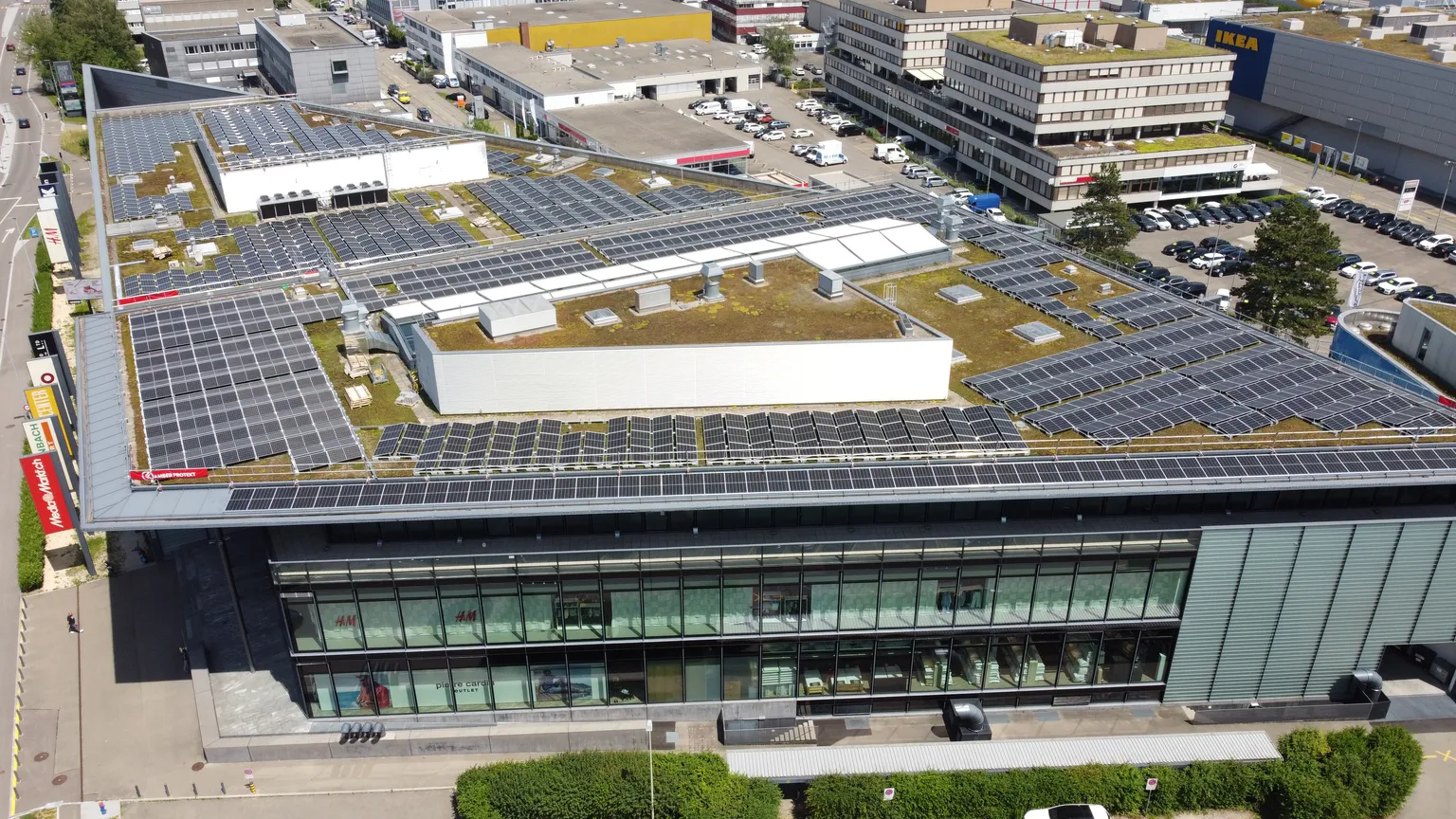
Around 1,750 solar panels have been fitted to the roof of the Brandbachcenter.
Massive expansion in PV
The huge PV installation on the Brandbachcenter is only part of AXA's sustainability efforts. The company plans to make an active contribution to Switzerland's sustainable energy supply by rolling solar panels out to more than 200 of the properties in its portfolio.
Swiss roofs still have untapped potential
There are many properties in Switzerland that offer potential for upgrading with PV systems, such as the roofs of residential or office properties. These are most commonly carried out using a method known as "merger for own consumption", in which the property owner pays for the PV installation and can then sell the solar electricity it produces to the participating tenants, who benefit from low prices. Locally produced solar power is a win-win situation for tenants and landlords alike – not only from a sustainability perspective, but also because of lower electricity costs.

Written by:

Joëlle Schmidt
Joëlle Schmidt is a media spokes person and topic manager in the AXA Newsroom.


